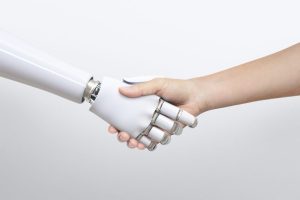
Today, the benefits of artificial intelligence (AI) in HR have become more than just a technological tool; it has become a tool for change in all sectors.
Companies that have integrated AI into their HR strategies are not only optimizing their internal operations; they are also revolutionizing the way they interact with their most important asset: their employees.
Artificial Intelligence as a strategy in Human Resources
The adoption of artificial intelligence is not a mere technological whim, but a strategic response to the growing need for agility, precision, and most importantly, a deeper and more respectful human approach in talent management.
The implementation of AI in HR is proving to be indispensable to foster a more inclusive work environment, increase employee satisfaction and retention, and prepare organizations for a future dominated by rapid change and innovation.
Benefits of using AI in HR
The set of benefits that we will see below demonstrates that the integration of Artificial Intelligence in HR is not just a trend, but a necessity for all those organizations that seek to lead the digital age.
Improve employee experience with benefits of AI in HR
The importance of employee well-being and a satisfactory experience continue to gain weight in the global organizational strategy of companies.
This leads to putting the use of Artificial Intelligence at the service of the employee, for example, through chatbots and virtual assistants; answering questions, facilitating onboarding processes or providing real-time support to workers who need it.
Analyze feelings and emotions
Following the previous line in which the employee plays a fundamental role in the business imagination, AI is beginning to be used to analyze the feelings and emotions of employees through surveys and internal communications. This helps to measure the work environment and detect well-being problems before they become critical.
Automate processes with AI to obtain benefits in HR
As we have seen throughout this e-book, AI is used to streamline processes that can be tedious in practically the majority of departments in organizations. In HR, the automation of processes through AI remains crucial to streamline administrative tasks such as payroll management, candidate selection, time registration, etc.
Promotes diversity and inclusion
AI is also becoming increasingly useful in promoting diversity and inclusion in the workplace by eliminating biases in selection processes, disparities in treatment, or identifying areas for improvement in HR practices that directly or indirectly affect achieving this diversity.
Promotes personalized development
AI can help adapt the learning and professional development experience of employees. By creating platforms and using highly personalized training programs, content can be tailored to individual needs, skills, and learning styles, thereby improving employee outcomes and satisfaction.
Anticipate future needs
AI is transforming predictive analytics in HR, allowing companies to anticipate future needs in terms of talent, performance, and employee retention. This can help predict when employees might leave the company, identify the factors that drive engagement and satisfaction, or anticipate hiring and training needs.
Given the above, integrating AI into HR is not just an effective improvement, but an essential strategy that increases talent retention and promotes a positive work environment, underlining its value as an indispensable tool for business success.
However, with great power comes great responsibility. Adopting AI in HR brings with it ethical and privacy challenges that require careful and thoughtful handling. It is imperative that organizations commit to caring for transparency, data protection, and respect for the dignity of every employee, ensuring that technology serves as a complement to humanity, and not a replacement.
Looking ahead, it is clear that AI is redefining what it means to work, learn, and grow within a company. HR leaders who embrace this technology with an ethical mindset, a human-centered approach, and a commitment to continuous improvement will not only be investing in the future of their organization, but also in the future of work itself.